

EP3C16Q240C8N FPGA: Applications, Alternatives and Datasheet
2025-05-23 14:45:22 1304
EP3C16Q240C8N Description
The EP3C16Q240C8N is a high-performance FPGA from Altera (now part of Intel), part of the Cyclone III family. It integrates 15,408 logic elements (LEs), 504kb of embedded memory and 56 18x18 embedded multipliers, providing powerful support for data processing and computational tasks. It also features rich I/O resources, wide supply voltage range and extensive temperature adaptability for a wide range of application scenarios. The EP3C16Q240C8N has demonstrated its excellent performance and wide application prospects in the fields of communication, industrial control, and consumer electronics.
EP3C16Q240C8N Features
High performance: With 15,408 logic elements (LEs), it supports complex logic and data processing tasks.
Large storage capacity: Provides 504kb of embedded memory and 516,096 bits of total RAM to meet large data storage requirements.
Computation Acceleration: Integrated 56 18x18 embedded multipliers to accelerate complex computations such as digital signal processing.
High-efficiency interconnect: High-efficiency interconnect and low-skew clock network ensure stable transmission of clock and data signals.
Flexible Programmability: As an FPGA, the EP3C16Q240C8N is highly flexible and can be programmed and reconfigured according to application requirements.
Low Power Consumption: As part of the Cyclone® III family, this FPGA realizes a low-power design while maintaining high performance.
Wide range of operating conditions: Supports a supply voltage range of 1.15V to 1.25V and an operating temperature range of 0°C to 85°C, making it suitable for a wide range of operating environments.
Convenient packaging: The 240-BFQFP package form factor allows for easy mounting and layout on PCBs.
EP3C16Q240C8N Applications
The EP3C16Q240C8N, an FPGA in the Cyclone® III family, has been widely used in a variety of fields due to its high performance, low power consumption, and flexible programmability. The following are its main application areas:
Communication: In the communication field, the EP3C16Q240C8N can be used in high-speed data transmission, signal processing and network equipment. Its high performance and rich logic resources make it capable of handling complex communication protocols and high-speed data streams, meeting the high demand for data processing capability in modern communication networks.
Industrial control: In industrial control systems, FPGAs are favored for their programmability and real-time processing capabilities. the EP3C16Q240C8N can be used in automation control systems, robotics and intelligent manufacturing. It is capable of real-time processing of sensor data, execution of complex control algorithms, and communication with various industrial equipment to enhance the efficiency and intelligence of industrial production.
Consumer Electronics: With the increasing intelligence and complexity of consumer electronics products, FPGAs are more and more widely used in them. EP3C16Q240C8N can be used for HD video processing, audio decoding, image processing and many other aspects. Its high performance and flexible programmability make it capable of providing high-quality multimedia processing effects and enhancing the user experience of consumer electronics products.
Other fields: In addition, the EP3C16Q240C8N can be used in a variety of fields such as medical electronics, automotive electronics, and aerospace. In these fields, the high performance, low power consumption and reliability of FPGAs make them an important tool for realizing complex electronic systems and algorithms.
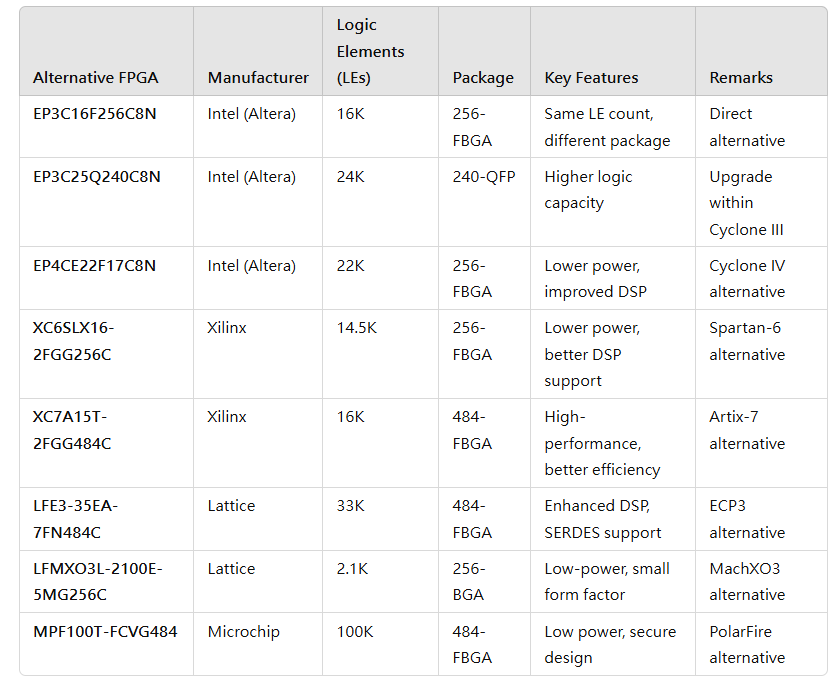
EP3C16Q240C8N Alternatives
EP3C16Q240C8N CAD Model
Symbol
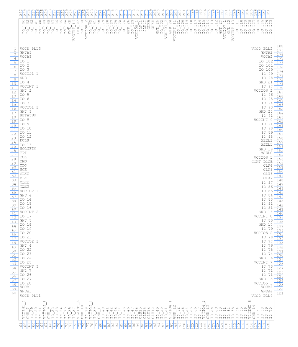
Footprint

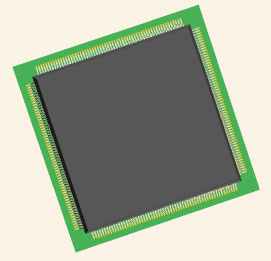
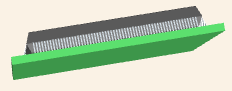
3D Model

EP3C16Q240C8N Manufacturer
Intel Corporation (Intel) is a global leader in semiconductor and computing innovation, headquartered in Santa Clara, California. The company was co-founded in 1968 by Robert Noyce and Gordon Moore, who were originally known for the development and production of integrated circuits. Since its inception, Intel has remained committed to pushing the boundaries of computing technology to bring a more efficient and intelligent computing experience to users around the world.
In the semiconductor industry, Intel has become one of the global market leaders due to its superior technological strength and innovation. Its product line covers a wide range of areas such as processors, chipsets, graphics processors, solid state drives, etc., providing high-performance and highly reliable semiconductor solutions for users around the world. Intel's processor products, such as Core and Xeon series, occupy an important position in the fields of personal computers, servers and data centers, providing powerful computing support for various application scenarios.
In addition to semiconductor products, Intel also actively promotes the development of computing innovation. The company is committed to researching and developing new technologies and applications to meet future challenges in computing. For example, in emerging areas such as artificial intelligence, the Internet of Things, and 5G communications, Intel has launched corresponding solutions and products to help customers realize digital transformation and business innovation.
Overall, Intel has set the benchmark in the semiconductor industry and computing innovation with its long history, superior technology and broad product line. Whether for individual users or enterprise customers, Intel provides reliable and efficient computing solutions that help them realize a smarter, more productive future.
EP3C16Q240C8N FAQ
1. Question: Which manufacturer is the EP3C16Q240C8N?
A: The EP3C16Q240C8N is a Cyclone® III series FPGA from Altera (now part of Intel).
2. Question: What are the main application areas for the EP3C16Q240C8N?
A: The EP3C16Q240C8N is widely used in a variety of applications including communications, industrial control, and consumer electronics. It is capable of handling complex data processing tasks and adapting to different application requirements.
3. Question: What are the technical specifications of EP3C16Q240C8N?
A: The EP3C16Q240C8N features 15,408 logic elements, 504kb of embedded memory, 56 18x18 embedded multipliers and 160 I/O pins. It has a supply voltage range of 1.15V to 1.25V, supports surface mount installation, and operates over a temperature range of 0°C to 85°C. The EP40C8N is available in a range of 1.15V to 1.25V and supports surface mount installation.
4. Question: What are my options if I am looking for a replacement for the EP3C16Q240C8N?
A: You may consider FPGA products from other manufacturers, such as similar models from brands like Xilinx and Lattice. When choosing a replacement, please make sure that the product's performance parameters, pin configuration and package form factor match your application requirements.
5. Question: Where can I purchase the EP3C16Q240C8N?
A: The EP3C16Q240C8N can be purchased from several electronic component distributors and retailers. You can use search engines to find reliable suppliers and compare prices and services from different channels. In addition, you can also contact Intel or its authorized distributors directly for purchase.


