

EP2C5T144I8N FPGAs: Features, Applications and Datasheet
2025-05-23 14:49:15 893
EP2C5T144I8N Description
The EP2C5T144I8N is a cost-effective, high-performance FPGA from Altera's Cyclone II family, designed to meet the needs of embedded system designers seeking efficient logic solutions with low power consumption. It integrates 4,608 logic elements (LEs) and 119,808 RAM bits, delivering solid logic processing and embedded memory capabilities in a TQFP-144 package. Operating at industrial temperature range (-40°C to 100°C), it is ideal for rugged environments. Its low power consumption, rich I/O resources, and flexible configuration options make it a preferred choice in industrial, automotive, and communication applications.
EP2C5T144I8N Features
Logic Capacity: 4,608 logic elements, supporting moderately complex logic designs.
Embedded Memory: 119,808 bits of embedded SRAM, ideal for buffering and temporary data storage.
I/O Pins: 91 I/O pins for versatile connectivity across different interfaces and peripherals.
Package Type: Compact 144-pin TQFP package, easy for PCB layout in space-constrained designs.
Configuration Options: Supports configuration via external memory and JTAG interface.
Operating Temperature: Industrial grade (-40°C to 100°C), suitable for harsh environments.
Low Static and Dynamic Power: Designed for power-sensitive applications, minimizing heat and extending system lifespan.
Clock Management: Multiple PLLs (Phase-Locked Loops) for robust clock control and timing flexibility.
EP2C5T144I8N Applications
The EP2C5T144I8N is widely used across multiple industries due to its balance of power, performance, and cost-effectiveness:
Industrial Automation: For motor control, real-time monitoring, and programmable logic controllers (PLCs).
Automotive Systems: Used in dashboard instrumentation, data logging, and safety control units.
Communication Equipment: For signal encoding/decoding, serial data transmission, and protocol bridging.
Medical Devices: In digital diagnostics and portable imaging systems, where low power and high reliability are essential.
Consumer Electronics: For custom logic in smart gadgets, gaming peripherals, and display controllers.
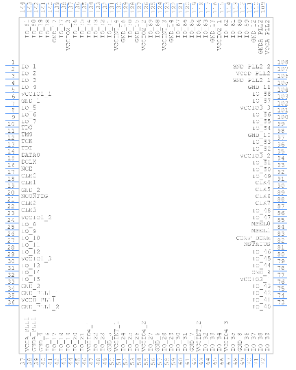
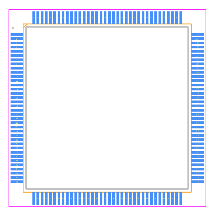
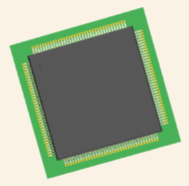
EP2C5T144I8N CAD Model
Symbol
Footprint
3D Model

EP2C5T144I8N Alternatives
If the EP2C5T144I8N is unavailable or your design requires different specs, consider these alternatives:
EP2C8Q208C8N – Higher logic and memory resources in a larger package.
XC3S50A-4TQG144C (Xilinx Spartan-3A) – Similar performance with Xilinx toolchain compatibility.
LFE2-6E-5T144C (Lattice ECP2) – Offers low power consumption and similar I/O count.
MAX10 (10M04SCU169I7G) – Modern Intel alternative with integrated flash and analog features.
iCE40HX4K-TQ144 (Lattice) – Ultra-low power FPGA optimized for mobile and battery-powered designs.
EP2C5T144I8N Manufacturer
Intel Corporation is a global leader in semiconductor innovation and one of the world’s largest manufacturers of microprocessors, chipsets, and computing technologies. Headquartered in Santa Clara, California, Intel was founded in 1968 by Robert Noyce and Gordon Moore, and quickly rose to prominence by pioneering technologies that have become the foundation of modern computing.
Best known for its x86 architecture-based CPUs, Intel's processors power everything from personal computers and laptops to data centers, servers, IoT devices, and autonomous systems. With a strong emphasis on research and development, Intel continues to push the boundaries in AI acceleration, edge computing, 5G infrastructure, and advanced semiconductor manufacturing.
In addition to CPUs, Intel’s expansive product portfolio includes FPGAs (through its acquisition of Altera), system-on-chip (SoC) solutions, solid-state drives (SSDs), network interface cards, and graphics solutions.
Intel’s commitment to performance, scalability, and innovation has made it a cornerstone of the global electronics ecosystem, driving forward the future of computing across virtually every industry.
EP2C5T144I8N FAQs
1. What is the configuration voltage range for the EP2C5T144I8N?
The configuration voltage typically ranges from 1.2V to 3.3V, depending on the interface and memory device used for programming.
2. Does EP2C5T144I8N support in-system programming?
Yes, it supports in-system programming (ISP) via the JTAG interface, allowing easy firmware updates without removing the chip from the board.
3. What is the maximum internal clock frequency supported?
The typical maximum internal clock frequency is around 260 MHz, but this may vary based on design and tool optimization.
4. Is the EP2C5T144I8N suitable for automotive use?
Yes, thanks to its industrial temperature range and robust performance, it is commonly deployed in automotive-grade systems.
5. What development tools are compatible with this FPGA?
The EP2C5T144I8N is supported by Intel Quartus II (formerly Altera Quartus II), offering comprehensive synthesis, simulation, and programming tools.


