

EP3C25F256I7N FPGAs: Features, Applications and Datasheet
2025-01-15 10:38:36 1319
EP3C25F256I7N Description
The EP3C25F256I7N is an FPGA (Field Programmable Gate Array) from Altera's Cyclone III family. It offers low power consumption, high performance, and a balance of logic resources, making it suitable for cost-sensitive applications. This FPGA is housed in a 256-pin FBGA package and operates at industrial temperature ranges.
EP3C25F256I7N Features
Logic Elements (LEs): 24,624.
Embedded Memory: 594 Kbits of embedded RAM.
I/O Pins: Supports up to 156 user I/O pins.
Low Power Consumption: Optimized for power-sensitive applications.
Integrated PLLs: Up to 4 phase-locked loops for clock management.
Wide Operating Temperature Range: -40°C to +100°C (industrial).
Package Type: 256-pin FBGA.
EP3C25F256I7N Applications
Industrial Automation: For controlling machines and processes.
Communications Equipment: Used in signal processing and switching systems.
Consumer Electronics: Enables enhanced features in home devices.
Automotive Systems: Provides logic for advanced vehicular functions.
Medical Devices: For image processing and diagnostic tools.
EP3C25F256I7N CAD Model
Symbol

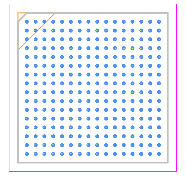
Footprint
3D Model


EP3C25F256I7N Alternatives
EP4CE22F17C6N: Cyclone IV FPGA with similar features.
XC6SLX25-2FTG256C: Xilinx Spartan-6 series FPGA.
LFE2-35E-5F256C: LatticeECP2 series FPGA.
5CEFA2F23C8N: Cyclone V FPGA for more advanced features.
AT40K40AL-1CQ256: Atmel FPGA for alternative applications.
EP3C25F256I7N Manufacturer
Intel Corporation is a leading global technology company renowned for designing and manufacturing advanced semiconductor products, including microprocessors, chipsets, and integrated circuits. Founded in 1968 and headquartered in Santa Clara, California, Intel drives innovation in computing, networking, and data storage. Its products power a wide range of devices, from personal computers to cloud servers and AI systems. Known for its flagship x86 microprocessors, Intel is at the forefront of technological advancements, shaping the future of computing and enabling transformative solutions across various industries.
EP3C25F256I7N FAQs
Question: What is the maximum operating frequency of the EP3C25F256I7N?
Answer: The maximum frequency depends on the specific design and timing requirements but can typically exceed 200 MHz in many configurations.
Question: Does the EP3C25F256I7N support multiple voltage levels for I/O?
Answer: Yes, it supports various voltage standards, including 1.2V, 1.5V, 1.8V, 2.5V, and 3.3V, depending on the I/O bank configuration.
Question: What design tools are compatible with the EP3C25F256I7N?
Answer: It is compatible with Altera’s Quartus Prime software for design, synthesis, and configuration.
Question: Can the EP3C25F256I7N be used in harsh industrial environments?
Answer: Yes, it operates in an industrial temperature range (-40°C to +100°C) and is designed for reliable performance in challenging conditions.
Question: Does the EP3C25F256I7N include built-in DSP blocks?
Answer: No, it does not have dedicated DSP blocks but can implement DSP functions using its logic resources.


