

What is an On-Board Charger (OBC)? Basic Principles and Functions of an OBC
2025-10-13 15:12:23 1709
OBC (On-Board Charger) is the abbreviation for an onboard charging unit, an electronic device designed to charge the high-voltage battery pack of a battery electric vehicle (BEV) or plug-in hybrid electric vehicle (PHEV). Its primary function is to convert alternating current (AC) from the grid into direct current (DC) suitable for the vehicle's battery pack, thereby charging the electric vehicle's power battery.
Basic Principles and Functions of an OBC
Utilizing high-frequency switching power supply technology, the OBC converts AC power into high-voltage DC power supplied to the EV's battery pack. Beyond charging, it provides multiple protective functions including overvoltage, undervoltage, overcurrent, and undercurrent protection to ensure safe and stable charging operations.
Classification of OBCs
Unidirectional OBC: Energy flows only from the grid to the battery. Suitable for budget EVs, featuring a simple structure and lower cost.
Bidirectional OBC: Enables bidirectional power flow, allowing electricity to flow not only from the grid to the battery but also from the battery back to the grid. Supports vehicle-to-grid power supply and is suitable for scenarios requiring reverse power delivery.
Integrated OBC: Combines the OBC with other high-voltage, high-power modules. Examples include the two-in-one integration of OBC and DC/DC converter, or multi-in-one integration with the motor, electronic control unit (ECU), gearbox, DC/DC converter, and battery management system (BMS).
OBC Application Scenarios and Significance
OBC is suitable for home or public AC charging stations, catering to slow-charging scenarios. Unlike DC charging stations, OBC is not used in scenarios requiring rapid charging, such as highway service areas. Additionally, OBC offers core advantages including high efficiency, high power density, compact size, and operational reliability, significantly enhancing EV charging efficiency and user experience.
The OBC, or On-Board Charger, performs the critical task of converting grid voltage transmitted through ground AC charging stations and AC charging ports into a form suitable for charging the vehicle's battery.
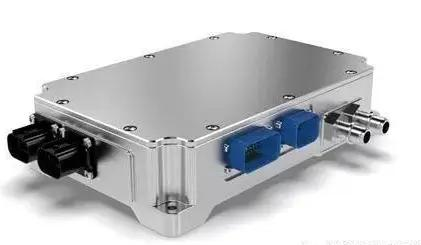
Figure. 1
Understanding the On-Board Charger (OBC)
Currently, OBCs in Chinese national standard electric vehicles must comply with the specifications outlined in “QCT 895-2011 Conductive On-Board Chargers for Electric Vehicles.”
Modern OBCs are typically designed as isolated types by default. This means an electrical isolation layer with a voltage withstand range of 2500V to 3750V is required between the grid side and the vehicle side to ensure electrical safety.
Understanding the Operation and Safety Features of On-Board Chargers (OBCs)
The OBC accepts AC input and outputs DC power to directly charge the traction battery. For vehicles lacking onboard charging capability, such as common “senior mobility scooters,” non-onboard chargers are used. These non-onboard DC chargers also accept AC input and output DC to charge the traction battery, but their power ratings are relatively lower.
Another type of charging equipment is the AC charging station, which handles both AC input and output. Consequently, it cannot directly charge the power battery. It requires connection to an on-board charger to perform AC-DC conversion for charging. AC charging stations feature a simpler structure, primarily serving to route grid AC power to locations convenient for EV charging while providing standard charging interfaces. Due to limitations imposed by the on-board charger's capacity, AC charging stations typically do not require excessive power ratings.
This charger not only allows owners to conveniently charge various digital devices using the vehicle's power supply but is also widely used for charging portable and handheld lithium-ion battery devices, such as powering 12V car batteries and 24V truck batteries.
The onboard charger incorporates multiple safety protections. First, its built-in automatic protection chip ensures safe operation in any environment, providing comprehensive safeguards for charging equipment. Second, the charger plug structure includes a fuse that immediately blows in case of overvoltage or excessive current, protecting devices from damage. Additionally, the onboard charger features USB ports supporting multiple USB power outputs for convenient charging of devices like smartphones.
Currently, OBCs on the market typically default to isolated types. This means an electrical isolation layer with a voltage withstand range between 2500V and 3750V is established between the grid side and the vehicle side, significantly enhancing electrical safety.
Electrical isolation technology ensures circuit safety by preventing direct current flow between different zones. While current is isolated, energy and information can still be effectively transmitted through electromagnetic induction, electromagnetic waves, and other means such as optical, acoustic, or mechanical methods.
Additionally, the onboard charger serves as a convenient accessory, enabling the use of vehicle power to charge various digital devices. It is compatible not only with 12V batteries in passenger cars but also with 24V batteries in trucks. This charger is widely used for charging lithium batteries in diverse portable and handheld devices.


