

Nordic Semiconductor Launches nRF54LM20A SoC with 2MB Memory, USB, and Ultra-Low Power for Next-Gen IoT
2025-09-22 15:04:57 2540
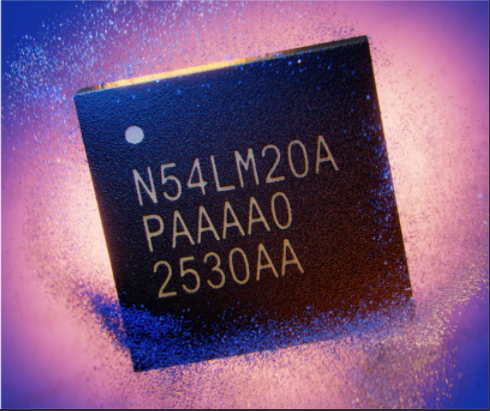
Figure. 1
Oslo, Norway – September 22, 2025 – Nordic Semiconductor (“Nordic”), a global leader in low-power wireless semiconductor solutions, announces the nRF54LM20A, the latest addition to its next-generation nRF54L family of ultra-low-power wireless system-on-chip (SoC) solutions. Built on Nordic's innovative 22nm technology platform, the nRF54L family simplifies design challenges while delivering reliable communication, extended battery life, and compact product designs.
Oyvind Strom, Executive Vice President of Nordic Semiconductor's Short Range business, stated: “The nRF54LM20A creates more opportunities for developers to build innovative connected products with higher demands for memory, interfaces, and performance. This launch marks a significant step toward offering a comprehensive nRF54L portfolio covering a wide range of applications, positioning us as an industry leader.”
nRF54L Series Continues Expansion as Applications Accelerate
As the high-memory variant of the nRF54L series, the nRF54LM20A features 2 MB NVM and 512 KB RAM while retaining the same MCU functionality. It incorporates a 128 MHz Arm Cortex-M33 processor and RISC-V coprocessor, enhanced with a high-speed USB interface and up to 66 general-purpose I/O ports for comprehensive peripheral configuration. It also integrates Nordic's fourth-generation ultra-low-power 2.4 GHz radio, supporting Bluetooth Low Energy, channel listening, and Matter over Thread protocols. Like other wireless SoCs in the nRF54L family, the nRF54LM20A delivers twice the processing performance and three times the processing efficiency compared to the industry-benchmark nRF52 series, while reducing power consumption by up to 50%.
Designed for Demanding Applications
The nRF54LM20A is engineered for advanced wireless products in consumer, smart home, commercial, and industrial markets. It is particularly well-suited for human-interface devices (HIDs), including gaming peripherals requiring low-latency wireless connectivity and high-speed USB. With 2MB of non-volatile memory and 512KB of RAM, the nRF54LM20A is an ideal choice for smart home devices (such as Matter implementations), providing ample redundancy for applications without requiring external memory.
Developer-Friendly Software Support
The nRF54LM20A is supported by Nordic's nRF Connect SDK, providing an easy-to-use framework for developing low-power, secure IoT applications that scale from simple use cases to feature-rich, innovative implementations. Built upon the Zephyr project and integrated with Nordic software, this SDK combines the best of open-source with highly optimized software featuring Nordic's proprietary capabilities and technologies. This powerful software suite delivers a complete solution, enabling developers to fully leverage the potential of devices like the nRF54LM20A.
Seamless PMIC Integration
For demanding wireless designs pursuing extreme power efficiency and extended battery life, Nordic's Power Management IC (PMIC) series is engineered for seamless collaboration with the nRF54L family of SoCs. Beyond enhancing power efficiency, integrating Nordic PMICs reduces system complexity, bill-of-materials (BOM) costs, and PCB footprint.
Availability
The nRF54LM20A is ready for development. Customers can apply for development kits and samples through Nordic's project-based early access program. Developers are encouraged to contact Nordic sales to initiate projects and begin development based on the nRF54LM20A. Mass production is expected to commence in Q1 2026.


