

EP5388QI DC-DC Converters: Features, Applications and Datasheet
2024-11-08 11:28:21 1091
EP5388QI Description
The EP5388QI is a high-efficiency, synchronous step-down (buck) voltage regulator designed for a wide range of applications. It is optimized to deliver low-voltage, high-current power efficiently and is typically used in powering processors, FPGAs, and other sensitive digital components. With a wide input voltage range and high output current capability, the EP5388QI is ideal for systems that require stable, clean power in a compact, integrated solution. It features advanced power management features and is available in a compact QFN package.
EP5388QI Features
Wide Input Voltage Range: Supports input voltages from 4.5V to 18V, offering flexibility for different power sources.
Output Voltage Range: Can provide a regulated output from 0.8V to 5.5V, with a high output current capability up to 8A.
High Efficiency: Typically achieves efficiency up to 95%, reducing heat generation and improving system reliability.
Integrated Power FETs: The regulator integrates both high-side and low-side FETs, which simplifies the design and reduces external component count.
Compensation-Free Operation: The EP5388QI operates without the need for external compensation, simplifying design and reducing component count.
Fast Transient Response: Provides excellent load transient response, ensuring stable operation even in dynamic load conditions.
Thermal Protection: Includes integrated over-temperature and overcurrent protection to ensure safe and reliable operation.
Compact Package: Available in a 5x5mm QFN-28 package, reducing PCB space requirements.
EP5388QI Applications
The EP5388QI is ideal for applications that require efficient, high-current voltage regulation, including:
Processor Power Supply: Used in systems that require low-voltage, high-current power for processors, FPGAs, or digital ICs.
Networking Equipment: Common in routers, switches, and base stations where stable power delivery is crucial.
Communications and Telecom Equipment: Powers communication chips in high-performance equipment that demands efficiency and reliability.
Industrial Automation: Suitable for robotics, motor control, and other industrial applications requiring a compact, reliable power solution.
Data Storage Systems: Powers SSDs, memory modules, and other storage components requiring stable power input.
Consumer Electronics: Can be used in portable devices like laptops, tablets, or gaming systems where power efficiency is important.
EP5388QI CAD Model
Symbol
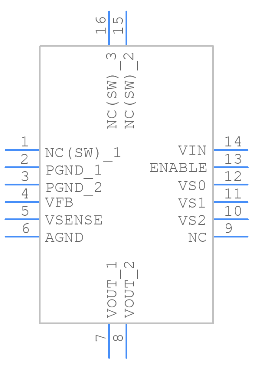
Footprint
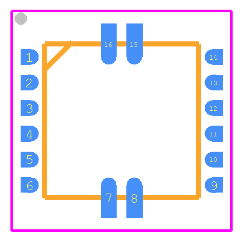
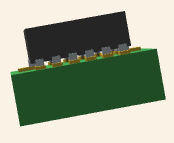
3D Model
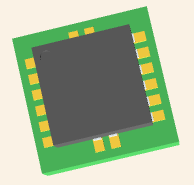
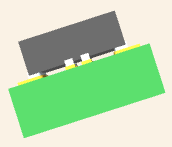
EP5388QI Alternatives
Here are a few alternative power management ICs similar to the EP5388QI:
EP5338QI (ON Semiconductor) – A similar step-down regulator, offering 8A of output current and high efficiency, but with slightly different input/output voltage ranges.
LM2678 (Texas Instruments) – A step-down voltage regulator with a wide input range, providing up to 5A of output current.
LT8640 (Analog Devices) – A high-efficiency buck regulator offering up to 6A of current with a low quiescent current for better power efficiency.
TPS563201 (Texas Instruments) – A synchronous step-down converter that offers compact, efficient power regulation with adjustable output voltage.
MAX17503 (Maxim Integrated) – A 4A, step-down regulator with high efficiency, designed for industrial and automotive applications.
EP5388QI Manufacturer
Intel Corporation is one of the world’s leading technology companies, known for designing and manufacturing semiconductor products, including microprocessors, memory chips, integrated graphics, and other high-performance computing components. Founded in 1968 by Robert Noyce and Gordon Moore, Intel has played a pivotal role in shaping the modern computing landscape, especially with its microprocessor innovations.
Intel is best known for its x86 microprocessors, which power the majority of personal computers, laptops, and servers worldwide. Over the years, the company has expanded its portfolio to include products and solutions for various emerging technologies, including artificial intelligence (AI), autonomous vehicles, cloud computing, and 5G telecommunications.
With a focus on innovation, Intel invests heavily in research and development (R&D), aiming to drive advancements in computing technologies, improve chip performance, reduce power consumption, and provide solutions to a wide range of industries, from consumer electronics to automotive and industrial applications.
EP5388QI FAQs
What input voltage range does the EP5388QI support?
The EP5388QI supports input voltages from 4.5V to 18V, providing flexibility for different power sources.
What is the maximum output current of the EP5388QI?
The EP5388QI is capable of delivering up to 8A of continuous output current.
What are the efficiency levels of the EP5388QI?
The EP5388QI typically operates with up to 95% efficiency, making it highly efficient for high-current applications.
What are the main benefits of using the EP5388QI?
The main benefits include high efficiency, wide input/output voltage ranges, integration of power FETs, and thermal and overcurrent protection.
What applications is the EP5388QI best suited for?
It is well-suited for processor power supplies, telecommunications equipment, industrial automation, consumer electronics, and high-performance data storage systems.


