

5M570ZT100I5N Features, Applications and Datasheet
2025-06-06 10:46:53 1338
5M570ZT100I5N Description
The 5M570ZT100I5N is a member of Intel’s (formerly Altera) MAX® V CPLD family. It is a low-power, high-density programmable logic device that utilizes non-volatile flash technology. Packaged in a 100-pin TQFP and rated for industrial temperature ranges, it offers instant-on capability and reliable in-system programmability, making it ideal for embedded and industrial applications.
5M570ZT100I5N Features
570 Logic Elements (LEs)
Up to 76 user I/Os
Package: TQFP-100
Speed grade: -5
Operating temperature: –40°C to +85°C (industrial grade)
Flash-based configuration – no external memory needed
Ultra-low static power consumption (typical ~80 µA)
Instant-on power-up capability
JTAG In-System Programming (ISP) support
Supports interfaces like I²C, SPI, UART
Optional internal clock management block (PLL)
5M570ZT100I5N Applications
I/O expansion and interface bridging
Industrial automation systems
Power management controllers
Automotive control logic
Glue logic replacement
LED display control
Board Management Controllers (BMC)
Communication and consumer electronics
5M570ZT100I5N CAD Model
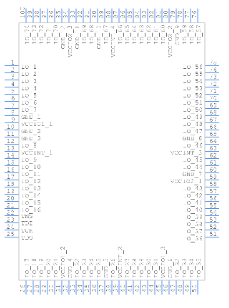
Symbol
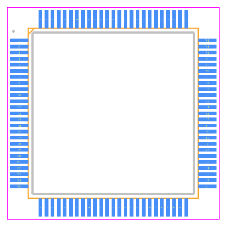
Footprint
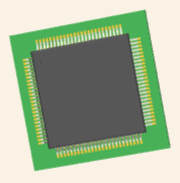
3D Model

5M570ZT100I5N Alternatives
5M240ZT100I5N – Lower density variant with 240 LEs
5M1270ZT144I5N – Higher density option with 1270 LEs
XC2C256-7TQG144C – Xilinx CPLD with comparable logic resources
ATF1508ASV-10JU100 – Microchip CPLD with similar capabilities (different vendor)
5M570ZT100I5N Manufacturer
Intel Corporation is a leading global technology company renowned for its innovation in semiconductor manufacturing and computing technology. Founded in 1968 and headquartered in Santa Clara, California, USA, Intel pioneered the development of microprocessors—the central processing units (CPUs) that power personal computers, servers, and a wide range of electronic devices.
Intel is best known for its x86 series of microprocessors, which are the foundation of most PCs. Over the years, the company has expanded its product portfolio to include a broad range of technologies such as chipsets, graphics processing units (GPUs), network interface controllers, field-programmable gate arrays (FPGAs), and embedded solutions.
As a market leader, Intel is heavily involved in areas such as artificial intelligence, autonomous driving, 5G, data center technologies, and the Internet of Things (IoT). It has a strong global presence with R&D and manufacturing facilities in multiple countries. Intel's commitment to innovation, quality, and performance continues to shape the future of computing and connectivity worldwide.
5M570ZT100I5N FAQs
Question: Is the 5M570ZT100I5N suitable for battery-powered systems?
Answer: Yes, it offers ultra-low static power, making it ideal for energy-sensitive applications.
Question:What voltage levels are supported for the I/O pins?
Answer: It supports 3.3V, 2.5V, and 1.8V logic levels, making it compatible with a wide range of systems.
Question: What’s the benefit of using flash-based configuration?
Answer: It enables instant-on performance and removes the need for external configuration memory.
Question:Can the device be programmed without removing it from the board?
Answer: Yes, it supports in-system programming via the standard JTAG interface.
Question: Is the 5M570ZT100I5N RoHS compliant?
Answer: Yes, it meets RoHS standards, making it suitable for environmentally friendly product designs.


