

5CGXFC5C6F23I7N FPGAs: Features, Applications and Datasheet
2025-07-25 16:51:12 1419
5CGXFC5C6F23I7N Description
The 5CGXFC5C6F23I7N is a mid-range FPGA from Intel’s Cyclone V GX series, designed for applications that require moderate logic density, transceiver support, and low power consumption. It integrates logic, memory, DSP blocks, and high-speed transceivers in a compact footprint, making it suitable for industrial and communication applications.
5CGXFC5C6F23I7N Features
Approximately 49,000 Logic Elements (LEs)
Around 4.5 Mbits of embedded memory
66 DSP blocks for efficient signal processing
Supports transceiver speeds up to 6.144 Gbps
240-pin FBGA package (23mm x 23mm)
Industrial temperature range (-40°C to +100°C)
Core voltage: 0.9V
On-chip PLLs for flexible clocking
Integrated hard IP blocks including PCIe Gen2 x1/x4 and DDR3/DDR2 controllers
5CGXFC5C6F23I7N Applications
Machine vision and automated optical inspection systems
Industrial automation, including motor control and PLCs
Scientific and medical instruments requiring high-speed data acquisition
Broadcast video equipment for processing and buffering
Communication systems like base stations and protocol converters
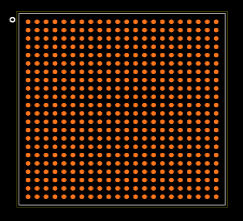
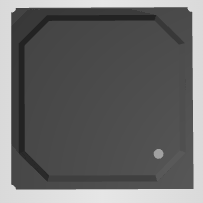
5CGXFC5C6F23I7N CAD Model
Footprint
3D Model

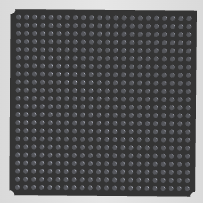
5CGXFC5C6F23I7N Alternatives
5CGXFC7C6F23I7N – Higher logic density in the same package
EP4CGX50CF23I7N – Older Cyclone IV GX series, lower performance
10CX085YF484I7G – Newer Cyclone 10 GX, with faster transceivers
LFE3C-50EA-6FN484I – Lattice ECP3 alternative, lower power
XC7A50T-1FGG484I – Xilinx Artix-7, similar cost and performance level
5CGXFC5C6F23I7N Manufacturer
Intel Corporation is a globally renowned American multinational technology company headquartered in Santa Clara, California. Founded in 1968, Intel is best known for designing and manufacturing semiconductor chips, particularly microprocessors that power a vast majority of the world’s personal computers and servers.
As a pioneer in the semiconductor industry, Intel has played a critical role in advancing computing technology for decades. The company’s portfolio includes CPUs, FPGAs, GPUs, chipsets, memory solutions, networking hardware, and system-on-chip (SoC) designs. Intel serves a wide range of markets, including consumer electronics, data centers, artificial intelligence, automotive systems, and Internet of Things (IoT).
With a strong focus on innovation, Intel continues to lead in process technology, manufacturing, and hardware-based security. Its products are known for performance, reliability, and energy efficiency. Intel also invests heavily in research and development to shape the future of computing through next-generation technologies such as quantum computing, neuromorphic computing, and advanced AI platforms.
5CGXFC5C6F23I7N FAQs
Does the 5CGXFC5C6F23I7N support PCI Express Gen 2 natively?
Yes, it includes a hard IP core for PCIe Gen2 with support for x1 and x4 configurations.
What types of memory interfaces are supported?
It supports DDR3 and DDR2 SDRAM using built-in hard memory controllers.
What is the maximum data rate for the transceivers?
The transceivers support data rates up to 6.144 Gbps.
Is this FPGA suitable for industrial environments?
Yes, it is rated for industrial temperatures from -40°C to +100°C.
How is signal processing performance enhanced in this FPGA?
The FPGA includes 66 DSP blocks and high-speed fabric, enabling efficient real-time digital signal processing tasks.


